Creature by Amina Cain

Creature by Amina Cain is a book of short stories, exploring at times the quiet lostness we feel in our identity and others a sort of uncomfortable horror. How those two things are actually relatable. The relation between finding yourself and turning that into the fictionalized yet realistic representation of how scary and dark that can be. What does it entail to become who you want to be? All the writing in this book is inspiringly poetic but not in a way that is confusing, for that reason I would recommend this book to anyone who appreciates beautiful language but has a hard time understanding poetry.

She who became the sun

she who became the sun was a book written by Shelley Parker-chan and it follows the life of a young girl in China named who lived with her father and brother in 1345. During this time a drought had riddled the land for years and had made the land almost impossible to live off of, but the family still lived there, her brother Zhu Chongba was told that he would become something great when he got older and his father saw hope in that, but one day there village was attacked by bandits and both the father and Zhu Chongba died that day, but the girl did not die, she decided that she would take up the act of her brother Zhu, changing herself to look like a man so she can survive. Zhu finds herself at a monastery for a lot of her life, and worked her way up the latter with only one person finding out her secret.

I really enjoyed this book, I liked how the author was able to show the struggles that Zhu went through during her life, and how she was able to overcome them with the limited space that she had, for most of her life she thought she was nothing since that was what everyone told her, but she was able to pick herself up and survive while taking up her brothers destiny. This book heavily makes me think of Mulan in many ways, from Zhu pretending to be a man to join a group that is 99% made of men, having to learn how to do basic things without anyone finding out her secret, and liking her determination that she held onto from the day that her brother and father died, that determination to survive at any cost, I respect that a lot as a person and as a reader

KINGS,QUEENS AND IN-BETWEENS

The story revolves around Nima Kumara-Clark, a teenage girl living in a small town. Nima feels trapped by the limits and norms of society, she is shy and introverted. Her life becomes chaotic after her mother leaves the family, leaving her alone with her family but loving her wholeheartedly. Nima falls in love with her best friend Ginny, but this love is not reciprocated, which makes her sad and confused about her self-esteem. As a lesbian living in a small community, she feels isolated and disconnected from people who can understand her. During a chance event at a drag festival, Nima is introduced to a whole new world – where people are free to express their identity. From here, she begins to explore different aspects of herself through unique encounters, she meets Deidre, a confident and charming drag queen, who becomes a mentor, helping Nima open up and help her make new friends. Gordon is a guy the same age as Nima, cheerful and humorous, and is the bridge that helps her enter this community. Wynn is the person Nima has feelings for, who helps her understand more about love, weakness and courage. After reading the book, I feel that the book has given me a perspective on the LGBT+ community, the book shows that we can completely escape the community and the norms of society. We can be lonely Nima because we do not dare to overcome the norms of society. One message I felt from the book is love and acceptance even when you feel lost in your own world and don’t know your own worth, always thinking that you have to fit in with the norms of society, but we will not be comfortable with that, we should be true to ourselves. Friendship and community are not only places to learn when we are a healthy community, it is not only a place to communicate but also a place to have empathy, learn and heal emotional wounds. Kings, Queens, and In Betweens is a profound novel full of energy and inspiration. This is not only a story about a girl finding herself but also a celebration and respect for the LGBT+ community. The LGBT+ community is the one who needs to be respected more than anyone else because they have lived true to their gender, what they feel comfortable with and what they want. Don’t stop anyone from doing something, don’t say they are strange, because deep down they are still themselves, they always know how to love and help.

Things we Couldn’t say by Jay Cole’s

Things we Couldn’t say by Jay Cole’s follows Giovanni, who has been dealing with a hole in his life when Giovanni was very young his mother suddenly left him and his brother and left them alone with their father. Giovanni has just started to recover from the pain of losing his mother when suddenly he receives an email from her. he must decide if he wants to try to patch things up with her or try to forget she is trying to come back into his life.

This book is one of my favorites that I have read this year. this book is one where once you start reading it you cant really put it down. all the ups and downs of the book keeps you engaged and makes you wonder what could happen next. this book is filled to the brim with emotion and the book succeeds in making you feel strong emotions. I do however think there could be a little more to the story as it could have had another chapter or to just to wrap up the story but the book is still amazing.

The characters are extremely well written and strongly development occurs through the story . Gio is a extremely well developed character. from the start of the book no matter what he did or said I still felt myself siding with Gio. if he was feeling a emotion like anger It really seemed like he was acting differently than before rather than the same.

The book is amazing and I would recommend it to anybody honestly. anybody could read this and like it. it has elements that everybody likes and I highly recommend it.

Persepolis: The Story of a Childhood – Marjane Satrapi

Persepolis tells author Marjane Satrapi’s childhood story up to 14 years old, all revolving around the war climate of Iraq, where she lived with her mother and father. Satrapi paints a vivid image of how it was growing up with the overturn of the Shah, which was followed by the Islamic Republic. Satrapi’s description is even more realistic when it is joined with the simple, yet beautiful, black and white illustrations on each page.

Persepolis was fantastic, this book is very short, with just 153 pages and those pages being in a graphic novel format. Even with its short length it sped by faster than I had ever imagined it going, Satrapi’s writing reads like poetry, accompanied by her graphic drawings. Saying that war is entertaining wouldn’t be the right way to put how I felt reading this book, it was devastating, yet it was like a gawk-block, where I couldn’t put it down but any moment I would hear a droplet fall and water drench my page, and only when my tears formed a puddle beneath me would I realize this book had made me feel ways about something i’m so unfamiliar with, a way not many books have, and I thank Satrapi for this experience that utterly destroyed me.

This book is a completely unbiased news broadcast, Satrapi tells the story how it was, how it was to run home thinking your parents had died in a bombing only to be relieved when it was just your neighbors that died, who you had grown so fond of, how it was to be a rebellious kid during wartime in Iraq, how it was to live a life, a tragic life, a life where you tell everyone your dream job is as a prophet, and how you talk to God, and how he believes in you when nobody besides your parents do. Satrapi is here to tell us how it was to live her life, the subtle joys she found under the rubble, after the bombings, and how some joys she didn’t feel so blessed for when she remembered there was more subtle joys to come.

Read this book if you want to feel joy, sadness, anger, rebellion, morose, lugubrious, pain, melancholy, read this if you want to know what it was like to live a life in Iraq during war, read this book. This should be talked about more, it’s wonderful, not only for the writing and the drawings, but for the painting of a life so unlucky, given to a child so grateful.

Any Sign of Life by Rae Carson

Paige Miller is a teenage girl who wakes up, after several days of being in a coma, to the apocalypse, her whole family dead, and no Wi-fi or power to try and contact anyone. She is hit with dread at the state she is in, while she was unconscious, she lost a lot of weight, and was severely dehydrated, and grew disgusted when she went downstairs and the scents of rotting food and decomposition hit her nose.

All she remembers is falling asleep after being exhausted from a terrible cold, but now that she is awake, it seems her whole world has fallen apart.

Going outside, she is met with the sight of a murder of crows, seemingly blanketing the ground in blackness, their beady eyes watching as Paige made her way to neighboring houses, hoping to find any survivors. She finds her neighbor’s dog Emmaline still alive, but everyone else is a rotting corpse.

While searching for food, she eventually finds a convenience store and meets another person who is alive. Paige is overjoyed that she is no longer alone, and that at least now she now has someone to talk to and potentially a new perspective on the state of the world. She now has hope that more people could possibly still be out there, alive and whole.

I think Any Sign of Life had an interesting exploration of a post-apocalyptic world, the story was rich and quick-paced, with a good balance of action and calm moments. The characters felt very organic and relatable as they navigated the loss of the human species as well as their old lives, and realizing the challenges of living in a world full of uncertainty and fear. There were moments of terror, of aching pain, of longing, and of the small joys as new friendships formed. The characters were each compelling in the fact that they had such a strong will to survive and keep living even when faced with the prospect of the world ending.

The beginning was very confusing as you see through the perspective of Paige who knows nothing about the state of the world, but as the story progresses, lots of the questions and confusions I initially had about the story were eventually answered. It gave closure, which is something I have complaints about at the end of books that lack answers to my questions, so I appreciated this fact.

However, one complaint I have centers around how grief is dealt with in the story, I felt like it was little unrealistic how the main character found her whole family dead, and in mere days she was already moving on and searching for other survivors. I realize that in a book there is only so long you can stay on certain topics, but it just felt a little rushed. It could just be the strange and dire situation Paige it met with preventing her from truly grieving for her lost family, but I found it a bit odd personally, but I do recognize everyone deals with grief in different ways.

I would recommend this book to anyone who is a fan of post-apocalyptic stories set in a dystopian world, or anyone who likes quick-paced page-turners filled with action.

Medusa by Nataly Gruender

Medusa By Nataly Gruender is a retelling of the myth of Medusa. In this book, Medusa, along with her sisters, Stheno and Euryale, are the triplet daughters of two minor sea gods. While her sisters are born immortal, Medusa is born mortal. All throughout their childhood her sisters excluded her and avoided her. At the wedding of her favorite sibling she receives an ominous prophecy from the Graeae. At the age of 18 their mother sends her and her sisters, together called the Gorgons, away. During their travels the sisters split up and while alone, Medusa gets raped by the god Poseidon, instead of helping her, her patron, Athena turns her into a being that has snakes for hair and whose gaze turns people to stone. The book follows Medusa as she goes through the world and meets amazing people on her way.

I really liked the book. I have read a lot of retellings of women’s stories within Greek Mythology. So far the only one that has been at this level of amazing is Circe by Madeline Miller. In modern culture Medusa has become a symbol of someone who has been assaulted, perception of her story has changed. When ancient people first heard the story of Medusa she was always portrayed as a vicious killer, a monster. But this book has shown a very different side of Medusa. A side that is a scared girl who got sexually assaulted, and she was the one that got punished for it. This book dives into trauma, perception, and familial love.

Rather than portraying the gods as emotionless villains, we get to see a side of the gods that is not ever shown. A soft side, one that shows that a lot of them do really care about mortals, a side that makes us understand them more. We see a soft side to characters that we never would expect. We see all-powerful being regret their decisions and second-guess themselves. This makes them a lot easier to relate to and care about. Gruender has found a way to make us feel even for people who have done horrible things, and people that may seem cold and rude.

This book is perfect for people who like books that are fast reads and show the side of stories that you otherwise would not get to see. It is filled with mythology, familial love, and will make you very happy and content.

Firekeeper’s Daughter by Angeline Boulley

The Firekeeper’s Daughter by Angeline Boulley follows an 18-year-old girl named Daunis Firekeeper. Daunis’ mother is white and her father was a member of the Ojibwe Nation in Minnesota. All of Daunis’ life hockey has been everything to her and her half-brother. But she got severely injured and can no longer play. When Meth overdoses and death increase Daunis meets Jamie Johnson and his uncle Ron. Together they work together to find out who is making and supplying a new version of Meth called Meth-X.

I really liked this book. I could relate to the characters and a lot of their problems. While the beginning of the book was a little slow, about half-way through the book it really picks up. The last half is full of revelations and unexpected plot twists. In the start of the book the pacing was a little slower than I would like, but throughout the book it began to pick up. As I continued to read the book I began to both really like a lot of the characters and dislike a few of the characters. As Daunis began to learn more about the people around her my perception of the characters changed in ways that would not have expected.

One thing that I didn’t really like in the book was the romance. While the romance makes sense for Daunis’ character, I felt like it ended up with an uneven power dynamic and a little rushed. It seemed like the characters jumped in really fast and never actually got to know each other or build up any chemistry. It felt like they were together just to be together. While the romance felt a little rushed and a bit forced, the book has so many other elements that overall make it a very good book.

This book is really good if you enjoy mystery, informational, and a deep dive into another culture.

The Perks of Being a Wallflower by Stephen Chbosky

The Perks of Being a Wallflower by Stephen Chbosky is a story of the stereo typical “wallflower” and his name is Charlie. He narrates the story through a series of letters addressing his fundamental high school years, the letters are all written to “dear friend” which I found complimentary to the whole premise. It is like reading a journal, he isn’t telling us the story because he wouldn’t have the courage too; it’s as if you simply snuck into his room and read his journal. I think in many ways this book is an exploration of what it means to be a teenager and what it means to be in high school, the often daunting and discouraging experience of it; this book is about sexuality and mental health. Exploring this spectrum of real and perfect, and where we all exist on that spectrum and what the balance is. One of the most beautiful parts of reading to me is the experience of living through people and understanding their stories, Chbosky did that very well. Though this is fiction it is very much real. It is an experience that is not rare or revolutionary, it is simple and relatable but the care that was taken when writing this is beautiful. I would not recommend this book to someone who loves high school or someone who exists peacefully at the top of the social hierarchy. This books also covers some instances of sexual abuse and suicide so brief trigger warning. But overall I loved this book and would recommend it to anyone who wants to read it!

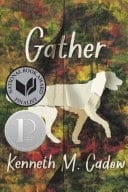
Gather by Kenneth M. Cadow

Put simply, Gather is the story of a boy, his dog, and his struggle to survive when faced with continuous challenges. Yet beneath the fast-moving plot and wry narration, the book explores a less-prevalent literary demographic as well as deeper societal friction.
Gather chronicles 16-year-old Ian’s sophomore year of high school as he deals with socioeconomic prejudice, his mother’s battle with addiction, and their struggle to hold on to their land, which has been in Ian’s family for generations. Alongside these complex situations, he also grapples with typical adolescent predicaments: romance, arguments with his mother, and the like. Central to the plot is the importance of and emphasis on community. Even in the most difficult times, Ian has someone there for him. Often, he has many someones. Through the compassion of these individuals, like his favorite teacher The Sharpe or his neighbors, Gather reinforces what good people who care are capable of doing.

Cadow’s novel delves into questions about the role of education today and how the school system interacts with students who aren’t always after an A. Ian doesn’t enjoy school; he would rather be out hunting with his grandfather. Ian feels that school teaches lofty ideals and information without any focus on how to use them, or why they may be important. He knows how to fix just about any machine, how to change snow tires, how to hunt–practical skills never mentioned within the halls of his rural Vermont high school. In this regard, Ian’s voice represents people who aren’t always portrayed in books: people who don’t necessarily like to read them. While many books claim to portray the perspective of an intellectual “outsider” or someone outside expected narration patterns, few achieve that feat. Gather does, and does so resoundingly. The writing isn’t incredibly complex, rather, it is unabashedly honest. Various characters, notably Sylvia’s former–professor father, also discuss what purpose education serves and if it can actually create change.

Additionally, Cadow’s novel spends several chapters exploring the intersection between public and private property – who has the right to what land, how far can we go to protect our property, and so on. This comes into play regarding hunting, which is allowed unless the property is posted, and also following an altercation between Gather and a trash can. I was prompted to think about property in the context of my own life. Our property is posted; I had never before considered how hunters may have felt when my family put up those signs.

The novel is able to be honest without losing its literary depth. Ian is an authentic, realistic character with a life that many people can relate to on some level. Gather employs first-person narration, jumping back to short recollections that return to connect to Ian’s situation at that particular moment. At times, this confused me, and some of the connections felt vaguely far-fetched. While certain aspects of the plot were thinly developed, and descriptions of the physical setting were sometimes lacking, in general the story read like someone’s real life. The author clearly understood the subject matter and the motivations of his characters.

People who enjoy adventure, survival, or realistic fiction reads would enjoy this book. Although I was intimidated at first by the prospect of a potential dog death–I never take those well–I was captivated by the authenticity of the story and its quick-paced plot. Gather teaches three big lessons: to never doubt the power of people to help each other, to remember that we never really know what is going on in someone’s life behind the scenes, and lastly, that a loyal dog is worth a dozen friends.